Start with the onboarding moment
Decide what job the kit is doing. Is it mainly a practical work starter, a brand introduction, a small celebration, or a mix of those things? A remote employee may need something different from a person arriving at a fully equipped office, even when the brand experience should feel consistent.
Write a short recipient brief before choosing products. Include the work setting, countries or locations involved, approximate quantities and the intended delivery moment. This gives every later product decision a reason.
A useful kit does not need to contain many items. It needs a clear point of view about what belongs there and what does not.
Build the core kit before adding extras
Define the standard contents first. Give each item a role: practical use, orientation, brand introduction, recognition or presentation. If you cannot explain why an item belongs in the kit, it is a good candidate to remove.
Separate essentials from optional additions. That makes alternatives much easier to manage when availability, budget or timing changes. It also prevents one unavailable product from forcing the whole program back to the beginning.
Think beyond product cost. Packaging, printed inserts, assembly, storage and shipping may all be part of the same program, so decide which of those costs need to sit inside the working budget.
Design the variations deliberately
Many welcome programs are not truly one kit. They are one core kit with controlled variations around it. Apparel size is an obvious example, but role, office, country, language or a personal message may also change what goes inside.
Create a simple version matrix. Keep the common contents stable and list only what changes. This reduces the chance that every variation turns into its own separate project.
At the inquiry stage, describe the recipient information the program will eventually need, but do not send unnecessary personal data through a public form. Once the project is scoped, agree the appropriate transfer method and who is responsible for the accuracy of each field.
Approve the packed experience
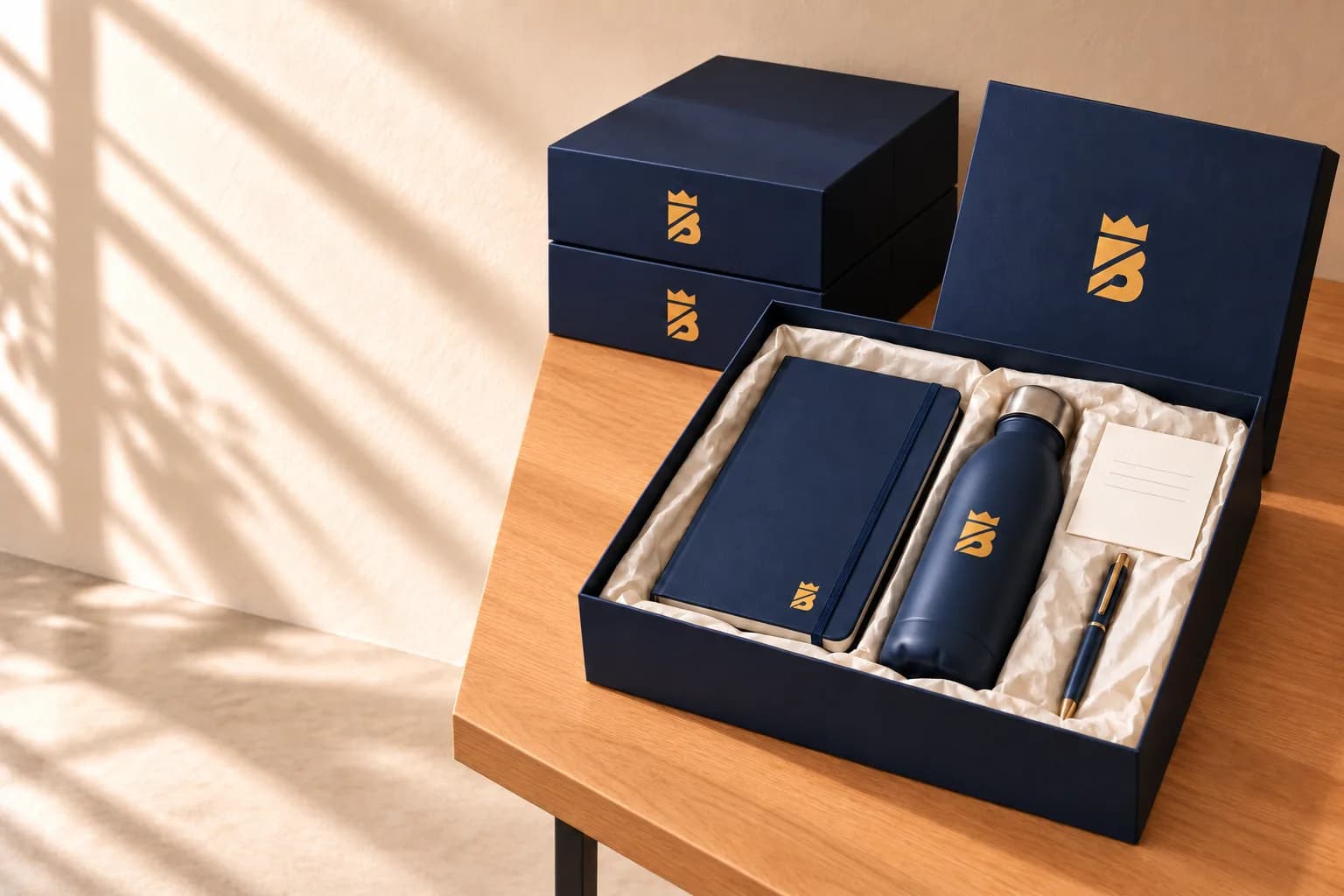
The kit is not finished when the products are selected. Decide what the employee sees first, how the items fit together and what should feel deliberate when the package opens.
Include the outer package, protective material, printed card, inserts and any presentation layer in the bill of materials. If the packed arrangement matters, approve a reference kit or packing layout before a larger assembly run.
That reference gives the assembly team something concrete to repeat. It also makes later questions easier: if a product changes, you can see whether the new item still fits the approved arrangement.
Decide how kits will be released
A one-time hiring group and an ongoing onboarding program need different operating models. For a one-time run, the main concerns may be recipient data, assembly and a dispatch deadline. For an ongoing program, you also need a rule for who requests a kit, how variations are approved and how stock is replenished.
If components or finished kits will be stored, agree what is being held, how balances are reported and who makes the replenishment decision. Do not assume the original product selection will remain available forever; recurring programs need a practical way to review substitutions or changes.
06 · Checklist
Build the brief around the whole program
Before asking for a quotation, bring together the parts that influence each other:
Tick what you already have
You can start before every item is final. A clear purpose, estimated volume and release model give Branding Czars enough context to help shape the remaining choices.